He didn't need more willpower.
He needed a system.

AzheSoftware engineer, 30
Published with his permission. Photos and data are his own.

Six months ago, Azhe weighed 110 kg (242 lbs). Thirty years old, a software engineer, long days at a desk. He had been trying to lose weight, on and off, for years. The numbers on his checkup report were ones he didn't like looking at:

Blood pressure148/96 mmHg
Fasting glucose6.8 mmol/L
Resting heart rate78 bpm

Sleep was poor too — a full night in bed, still tired in the morning. He had tried everything within reach: four weight-loss apps, two gym memberships, countless rounds of "this time I'll be disciplined." None of it lasted two months.

Azhe back then: racing with a carrying pole and baskets at a company field day, grinning
Azhe back then. Always game, always trying — the numbers just wouldn't move.

Eventually, something clicked:

It wasn't that he wasn't trying hard enough. He had simply never managed his health as one thing — scattered attempts, running on sheer will until the will ran out.

His health data was scattered everywhere.

Activity lived in his watch. Weight in another app. Blood pressure stayed on the monitor. Years of lab results were buried in PDFs, and what he ate was mostly a matter of memory. Each number was useful on its own, but none could answer what he actually wanted to know: Why am I not getting better? What should I change next?
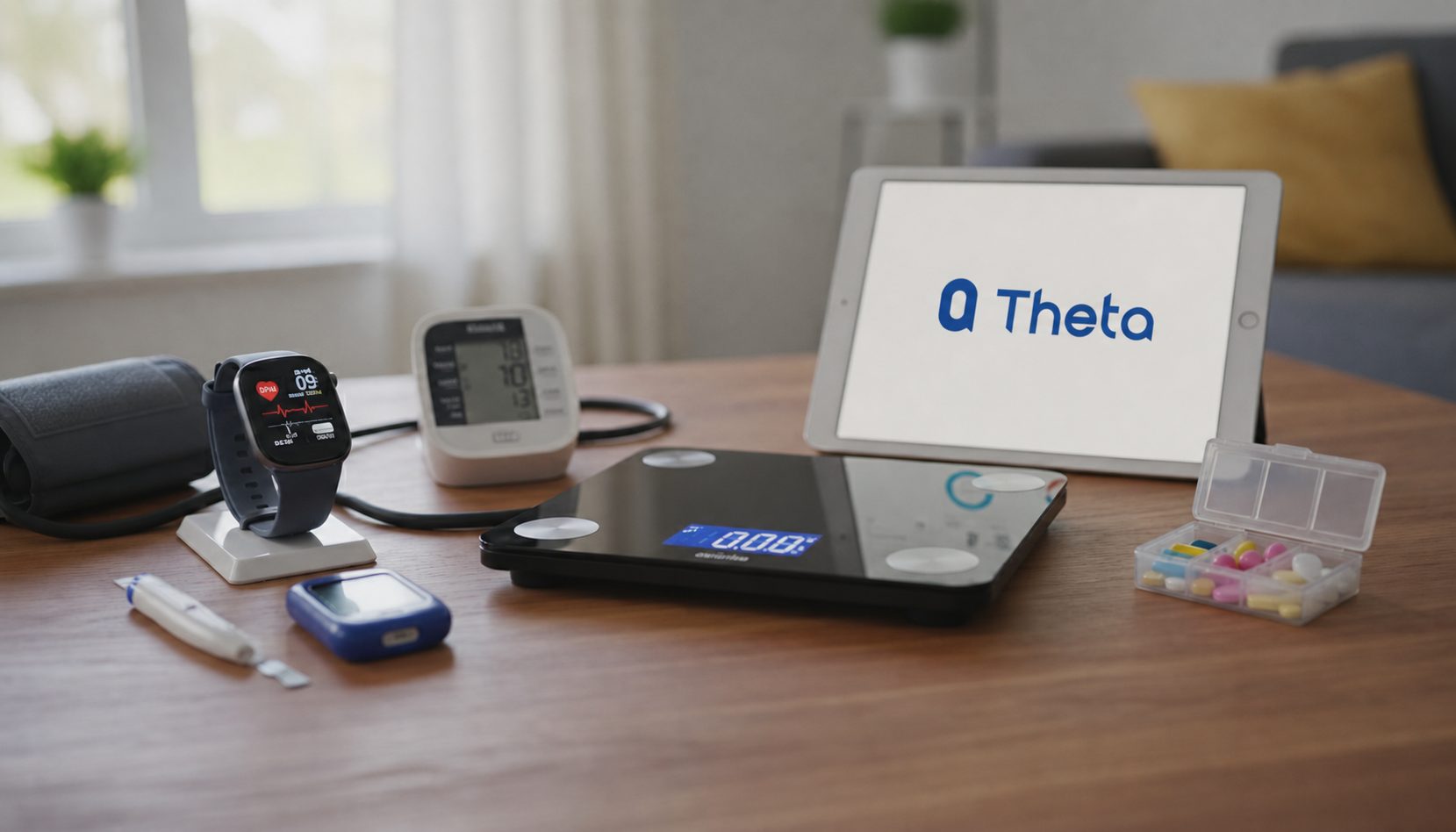
Health devices scattered on a desk: watch, blood pressure monitor, scale, glucose meter, and a tablet showing Theta
Watch, blood pressure cuff, scale, glucose meter — every device minding its own numbers, none of them talking.

So he connected his watch and blood pressure monitor to Theta, uploaded years of records and lab reports, and started jotting a few things down each day: what he ate, how he trained, how he slept, what he weighed. A few minutes a day.
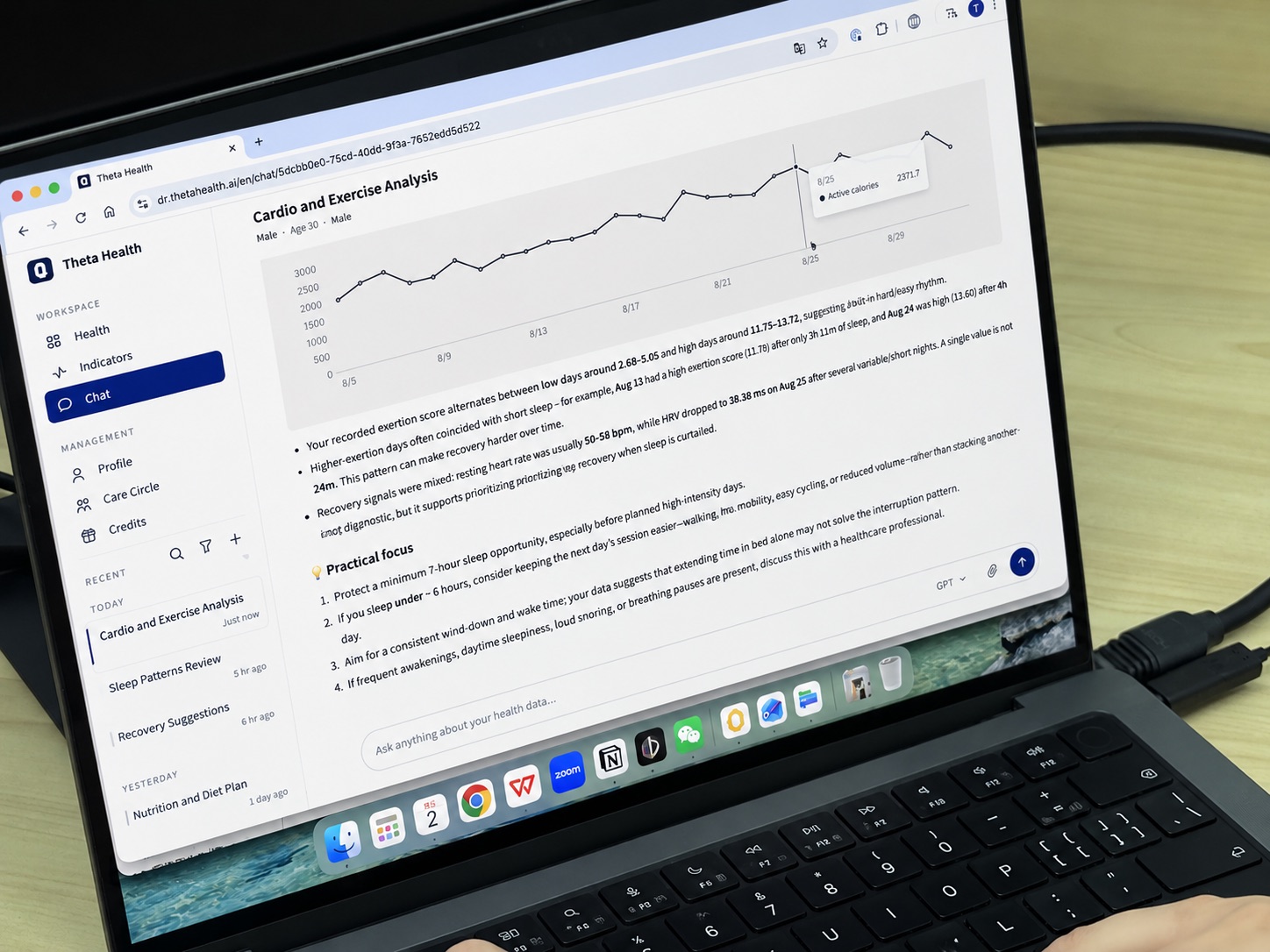
Theta on the web: sleep and exercise analysis with an activity trend chart and personalized guidance
Azhe's Theta workspace: sleep and training analyzed together — a hard session on short sleep means recovery pays the bill.

For the first time, nutrition, training, sleep, and labs were no longer isolated numbers — his health finally ran along a single line.

Then he hit a plateau.

Month four, the scale stopped moving. His first instinct was the old one: eat less, push harder. But with everything laid out together, the story was different — his calories were already low. What had been missing all along was protein, especially on training days.

So instead of starving himself again, he changed the playbook: more protein, real recovery, a training routine he could actually sustain. And he kept going.

What the new playbook looked like day to day.

Three sessions a week, nothing heroic. What changed was where they ended up: every session, every meal, every night of sleep landed in the same place — so none of it had to be remembered, and none of it sat in a separate app.
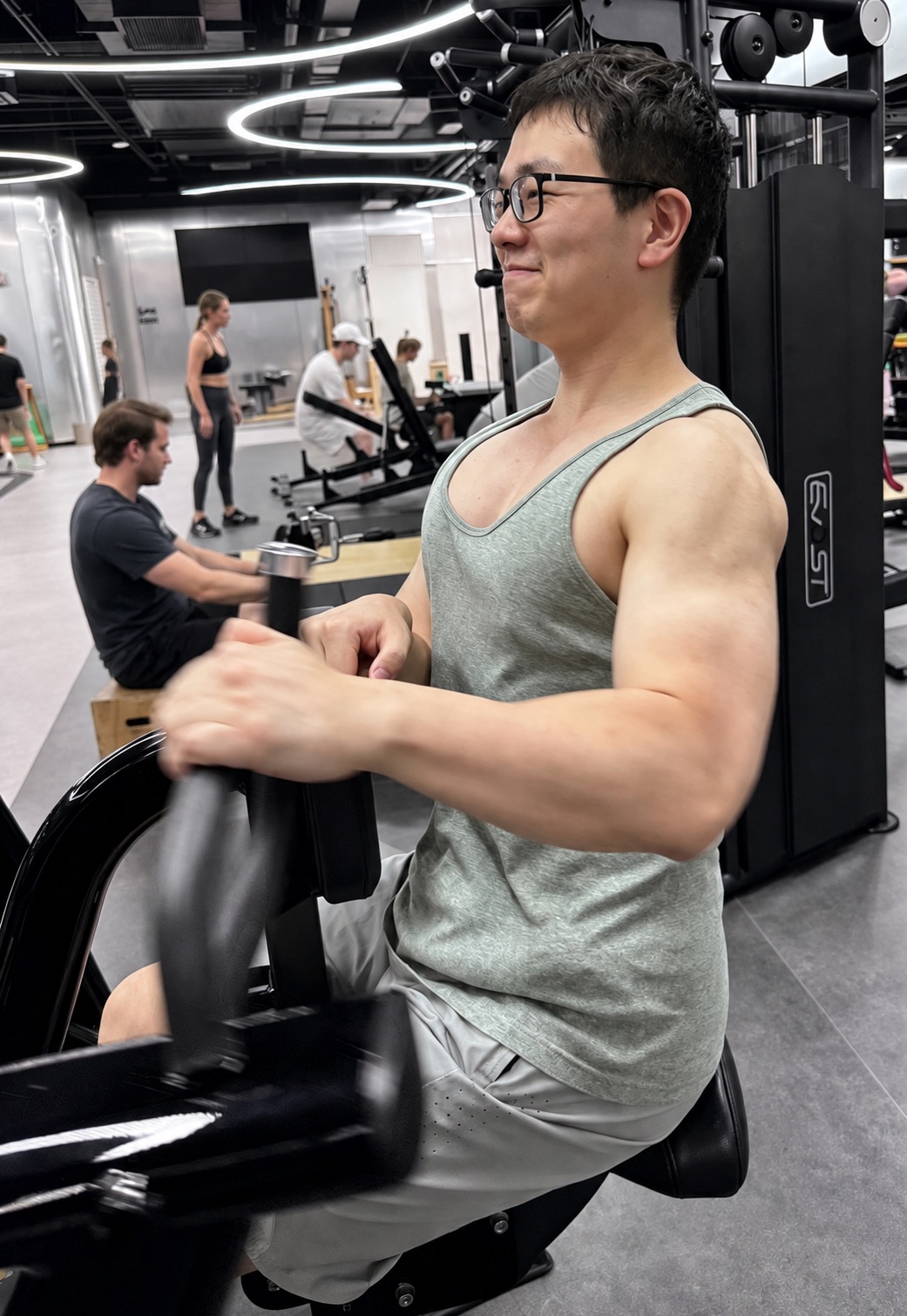
Azhe mid-session on a seated machine at the gym, in a tank top
Mid-session. Three times a week — logged in a couple of taps on the way home.
Logging a day in the Theta app — a workout, a meal, last night's sleep. A minute, maybe two.

The log was never the point. The point was that a month in, he could ask why a session felt terrible and get an answer that accounted for his sleep, his protein and his last four weeks — instead of a guess.
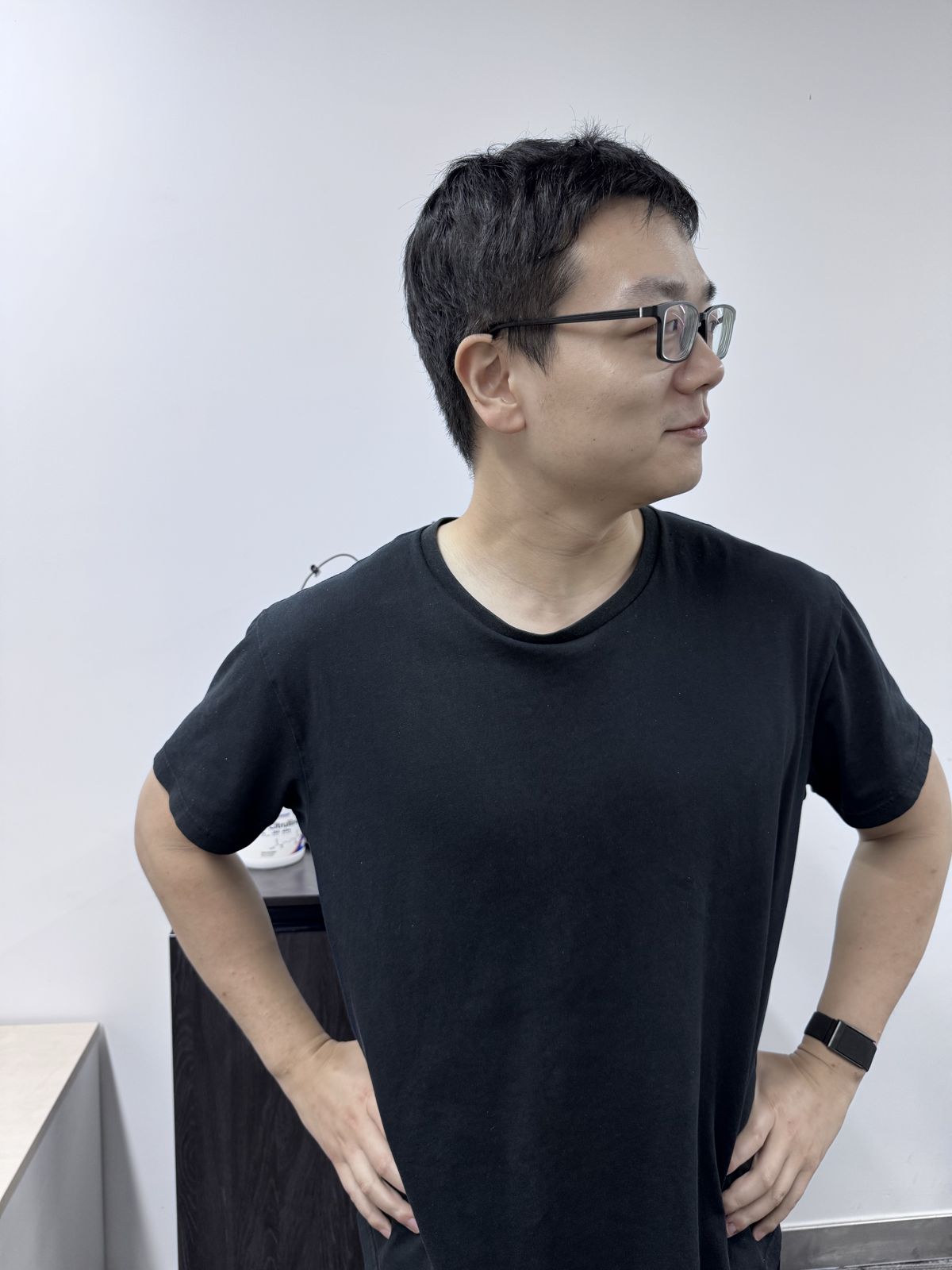
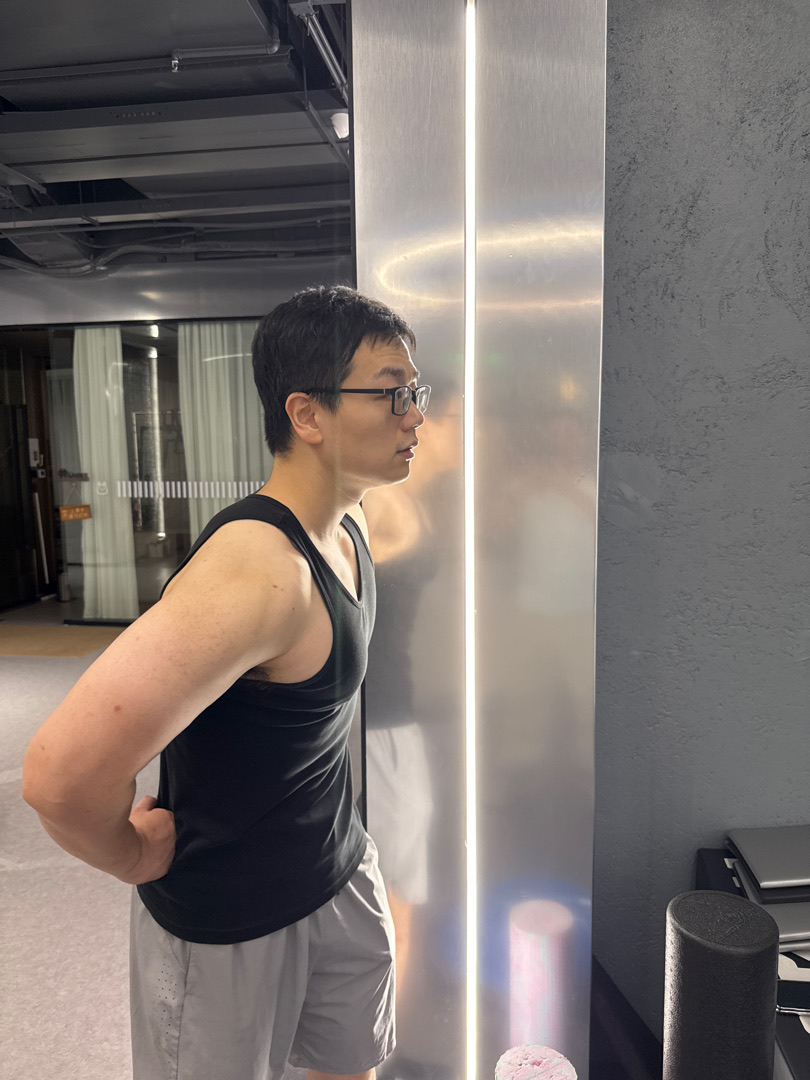
Six months later.

Azhe after changing the playbook: black t-shirt, watch on his wrist
Azhe, six months in.
Weight110 kg88kg
Blood pressure148/96121/78
Fasting glucose6.85.4mmol/L
Resting heart rate7865bpm

No extreme fasting. No meal-replacement shakes. No trainer hovering every day. What actually worked was a very plain loop:

RecordUnderstandAdjustRepeat
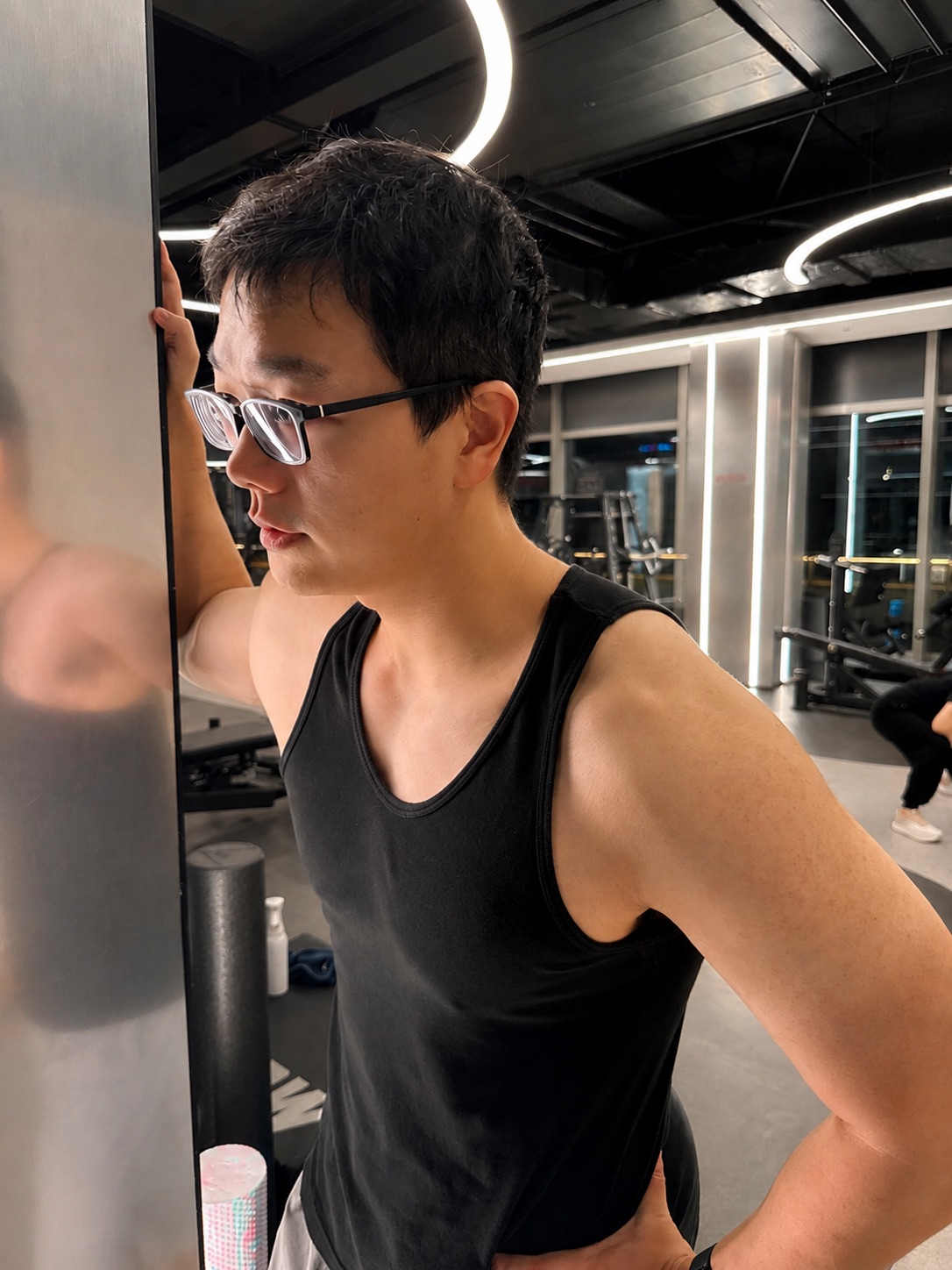
Azhe in profile at the gym mirror, six months onAzhe leaning on the gym mirror, shoulder and arm definition visible
Twenty-two kilos down, and stronger than when he started. The gym is just part of the week now.
"The biggest change isn't the 22 kilos. It's that for the first time, I can read what my body is doing."
Azhe, Theta user (quote pending his confirmation)

Your body has been talking. The data was just too scattered to hear.

Your watch shows heart rate, your scale shows weight, your lab report shows a snapshot from six months ago. But health isn't a stack of snapshots — it's a timeline. Sleep shapes recovery, recovery shapes training, nutrition shapes glucose. The signal hides in the connections.

Theta brings your records, labs, wearable data, sleep, nutrition, and training onto one timeline, so you can see three things clearly: What changed? Why? What should you watch next?

Your health has a history.
Theta helps you remember it.

Bring your health onto one timeline
Connect your wearables, upload your records, start your own log · Follow Theta Health on LinkedIn